



















Your Guide from Singapore’s Barcode Experts
Navigating the world of barcode technology can be complex. This definitive guide is brought to you by Barcode.com.sg, Singapore’s leading provider of barcode, RFID, and auto-ID solutions for over 15 years.
We have partnered with thousands of businesses across the island—from retail stores and logistics giants to SMEs and healthcare providers—to implement the right data capture technology that drives efficiency and growth. Our recommendations are based on real-world experience deploying scanners in the unique environments of Singaporean businesses, ensuring you get advice that is both practical and authoritative.
Executive Summary: 1D vs 2D Scanners at a Glance
Short on time? Here’s the quick answer: Choose a 1D Laser Scanner for high-speed, low-cost scanning of traditional linear barcodes at a dedicated checkout counter. Choose a 2D Area Imager for versatile scanning of both 1D and 2D barcodes (like QR codes), especially if you need to scan from phone screens or future-proof your business.
| Feature | Choose a 1D Laser Scanner if you need… | Choose a 2D Area Imager if you need… |
| Barcode Types | To scan only traditional linear barcodes (UPC, EAN). | To scan both 1D and 2D barcodes (QR, DataMatrix). |
| Primary Use | High-speed, dedicated retail checkout. | Versatility for inventory, mobile coupons, and digital tickets. |
| Cost | The most budget-friendly upfront option. | A higher initial investment for long-term versatility. |
| Scanning from Screens | No, cannot read phone screens. | Yes, perfect for mobile tickets and coupons. |
| Best For | Simple, high-volume scanning of pristine barcodes. | Future-proofing and handling damaged or complex barcodes. |
What is a Barcode Scanner?
A barcode scanner, also known as a barcode reader, is an electronic device used to capture data from printed or digital barcodes and transmit it to a computer or inventory system. Businesses commonly use barcode scanners in retail, warehousing, logistics, and healthcare to improve accuracy, speed, and operational efficiency.
In modern business environments, barcode scanners are available as 1D laser scanners and 2D area imagers, each designed for different operational needs.
Choosing the right barcode scanner is a crucial step in enhancing operational efficiency for any business. A barcode scanner, also known as a barcode reader, is a device used for data collection by reading barcodes and transmitting data to a computer or other equipment. Understanding the difference between 1D and 2D barcode scanners goes beyond simply recognizing the types of barcodes they read; it also affects scanning speed, data capacity, scalability, and ultimately your business’s bottom line.
This comprehensive barcode scanner buyer’s guide will walk you through the critical distinctions between 1D and 2D scanners, helping you determine which scanner type fits your specific business needs. Additionally, the form factor of the scanner—whether handheld, fixed, or presentation models—plays a significant role in its suitability for different environments and workflows. Whether you operate a retail store, manage warehouse inventory, or track assets in industrial environments, selecting between 1D laser scanners and 2D area imagers will directly impact your daily operations and long-term success.
Choose the Right Scanner Technology for Maximum Efficiency
Selecting the right scanner technology means aligning your business’s scanning needs with the capabilities of the device. Most barcode scanners fall into two fundamental categories: 1D and 2D scanners, each designed for different applications and environments.
1D scanners are optimized for simple, high-speed scanning where one dimensional barcodes dominate. They provide the fastest scanning speeds and are typically the most cost effective choice for businesses with established linear barcode systems. Conversely, 2D scanners are capable of reading a wide variety of barcode types, including both 1D and 2D barcodes such as QR codes. They offer versatility and future-proofing by reliably handling damaged barcodes and complex symbologies, making them suitable for diverse environments.
When choosing the right barcode scanner, key factors to consider include the type of barcode you scan most often, environmental conditions, daily scanning volume, and your budget. Understanding these factors helps avoid costly mistakes and ensures your investment supports current operations and future growth.
What Makes These Scanner Technologies Unique?
1D Laser Scanners – Speed and Simplicity Excellence
1D laser scanners utilize focused laser beams and photodiodes to scan linear barcodes by measuring reflected light patterns. These scanners transmit data by interpreting the varying widths of bars and spaces in one dimensional barcode formats. Since their introduction in 1974, laser scanners have been the gold standard for high-speed scanning applications in retail and industrial settings.
Another common 1D scanning technology is the linear imager, also known as a charged coupled device (CCD). Unlike laser scanners, linear imagers capture digital images of barcodes using an array of tiny LED lights and sensors.
The key advantages of laser scanners include lightning-fast scanning speeds, capable of processing hundreds of items per minute, making them ideal for high-volume retail checkout counters. They are also cost effective, with basic handheld models often priced under $100, and offer proven reliability in department stores and assembly lines.
Laser scanners excel in applications such as retail checkout systems, basic inventory management, and simple product tracking where UPC-A and other standard linear codes dominate. Typically, laser scanners operate within a scanning distance of 2 to 24 inches, with optimal performance at mid-range distances. They can read up to 25 characters in standard linear formats, sufficient for basic product identification and inventory control.
However, laser scanners have limitations. They are unable to effectively read damaged or poorly printed barcodes and cannot scan 2D barcodes like QR code scanner or DataMatrix symbols, which are increasingly common in modern supply chains. Linear imagers offer some improvement by occasionally reading poorly printed or damaged barcodes better than laser scanners, making them preferable in environments with inconsistent barcode quality.
2D Area Imagers – Versatile Image-Based Technology
2D area imagers function like a digital camera, capturing detailed images of barcodes and using sophisticated image processing software to decode the information. This technology marks a shift from laser-based scanning to comprehensive imaging systems capable of reading virtually any barcode type.
The primary advantage of 2D scanners is their universal barcode compatibility. They read all 1D and 2D barcode formats, from traditional UPC codes to modern QR codes used in mobile applications. They excel at reading damaged barcodes, wrinkled labels, and codes displayed on digital screens, significantly reducing scanning failures in challenging conditions.
Advanced features set 2D scanners apart. They can store up to 2,000 characters of data, enabling complex applications such as tracking inventory with detailed product information, batch numbers, and expiration dates. Their extended scanning distance, often exceeding 3 feet, improves ergonomics and workflow efficiency in warehouses.
Additionally, 2D scanners support hands free scanning modes, continuous scanning capabilities, and integration with wireless networks for real-time data transmission. As businesses increasingly adopt mobile coupons, digital tickets, and smartphone-based payment systems, 2D scanners become essential for reading barcodes from device screens.
While 2D scanners typically have higher initial costs compared to basic laser scanners, their versatility often delivers superior long-term value. Improved read rates and reduced manual data entry contribute to lower operational costs over time.

Understanding 1D and 2D Barcodes
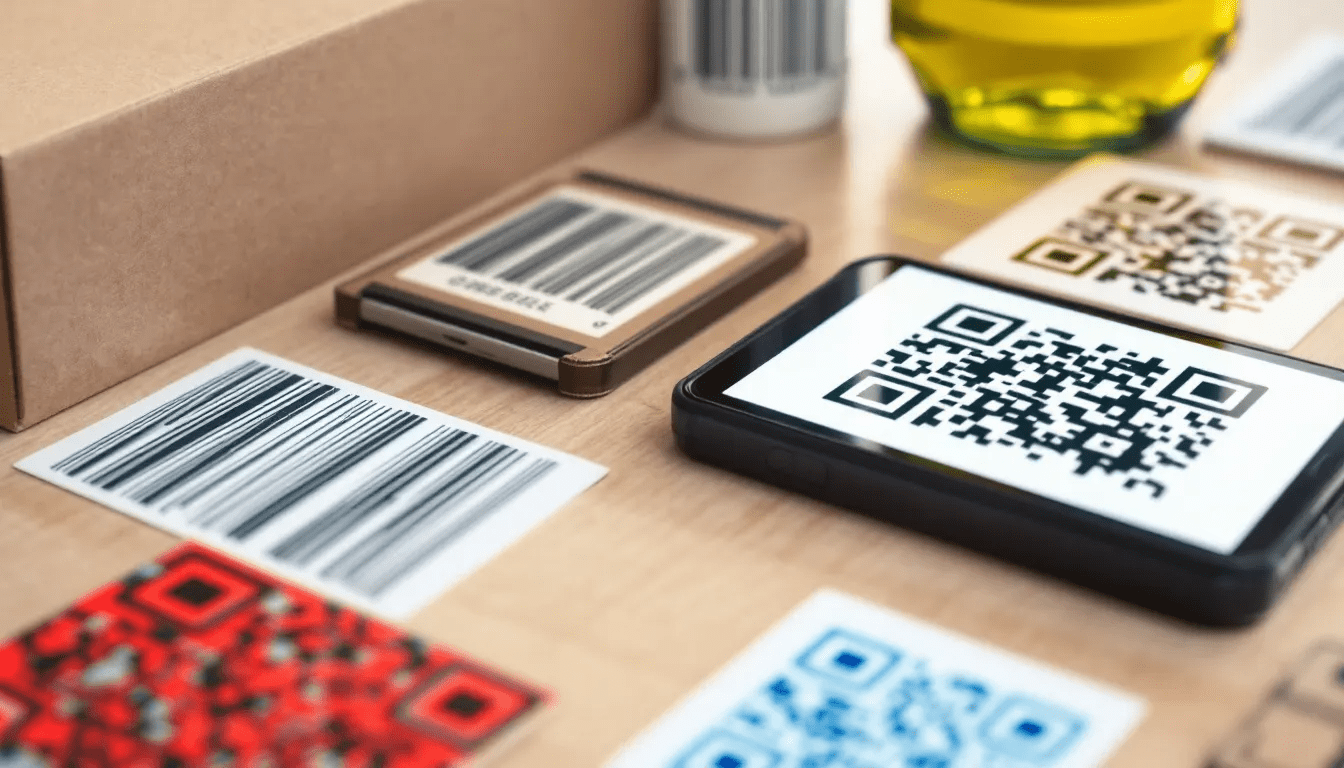
Barcodes are broadly categorized into two types: 1D and 2D, each fulfilling unique roles in data capture and business operations. One-dimensional (1D) barcodes, also known as linear barcodes, consist of black-and-white lines arranged horizontally. Common examples include UPC-A, EAN, and Code 39. These barcodes store information in a single line and are widely used in retail stores for tracking inventory, managing assets, and speeding up checkout processes. Their simplicity makes them ideal for applications requiring quick, straightforward data capture.
Two-dimensional (2D) barcodes store information both horizontally and vertically, allowing them to hold significantly more data in a compact space. Popular 2D barcodes include QR codes, which appear on product packaging, marketing materials, and event tickets. Industries such as healthcare, logistics, and retail increasingly use 2D barcodes for complex data storage needs like patient tracking, shipment management, and digital coupons.
Most barcode scanners are designed to read either 1D or 2D barcodes, though not all can handle both. When selecting a barcode scanner, consider the barcode types your business uses most frequently. If your operations rely primarily on traditional 1D barcodes, a 1D scanner may suffice. However, if scanning 2D barcodes like QR codes is essential for marketing, authentication, or advanced tracking, investing in a 2D barcode scanner ensures your readiness for current and future demands. Understanding these differences helps you select the right scanner for your data capture and business growth.
Applications of Barcode Scanners Across Industries
Barcode scanners have become indispensable tools across numerous industries, driving efficiency and accuracy in everyday operations. In retail stores, barcode scanners are used at checkout counters to quickly scan product barcodes, manage stock levels, and streamline point-of-sale transactions. Handheld barcode scanners are especially popular in warehouses, where they assist staff in tracking inventory, monitoring shipments, and optimizing logistics for faster order fulfillment.
In healthcare, barcode scanners play a critical role in patient safety and supply management. Cordless barcode scanners enable nurses to scan patient wristbands and medication labels at the bedside, reducing errors and improving record accuracy. Presentation scanners are commonly used at pharmacy counters or supply rooms to scan barcodes on medical supplies, ensuring proper tracking and inventory control.
Manufacturing and industrial environments rely on barcode scanners to maintain productivity and quality. Many models are built to withstand harsh conditions, repeated drops, and exposure to dust or moisture, making them ideal for assembly lines and production floors. Wireless scanners provide mobility for workers scanning barcodes on large equipment or in remote facility areas, while corded scanners offer reliable, continuous operation at fixed workstations.
Logistics companies use barcode scanners to track packages throughout the shipping process, from warehouse to delivery. Scanning barcodes at each stage enables real-time updates and ensures accurate, on-time shipments. The right barcode scanner—whether handheld, cordless, or presentation—can significantly improve process efficiency, reduce errors, and enhance customer satisfaction.
Selecting the right barcode scanner for your industry and application is a relevant factor in streamlining processes, boosting productivity, and increasing profitability. With many models available to suit different environments and needs, businesses can find scanners that deliver reliable performance even under demanding conditions. For businesses also facing label printer problems, exploring practical solutions can further help maintain seamless operations.
1D vs 2D Scanner Performance: Head-to-Head Comparison
Scanning Range and Distance
Scanning distance capabilities highlight fundamental differences between 1D and 2D scanners. 1D laser scanners operate optimally within a limited range of 2 to 24 inches, requiring operators to position the scanner close to barcodes for reliable scans. This limitation can affect workflow efficiency, especially in applications needing frequent scanning at varying distances.
In contrast, 2D area imagers offer superior flexibility, with effective scanning ranges from close contact to over 3 feet away. This extended range improves ergonomics by reducing operator fatigue and allows scanning of barcodes in hard-to-reach locations. In warehouse environments, this translates to faster processing times and less physical strain on workers.
The ability to scan from a greater distance significantly enhances workflow efficiency. Workers using 2D scanners can scan items on high shelves, deep storage areas, or crowded assembly lines without repositioning themselves or the items. This flexibility is particularly valuable in industrial environments where speed and ergonomics directly impact productivity.
Barcode Compatibility
Barcode compatibility is perhaps the most critical difference between these scanner types. 1D laser scanners exclusively read linear barcode formats such as UPC, EAN, Code 128, and Code 39. While these formats cover most traditional retail and inventory applications, they cannot accommodate emerging barcode standards.
2D area imagers provide comprehensive compatibility, reading all traditional 1D formats plus modern two dimensional codes like QR codes, DataMatrix, and PDF417. This versatility ensures compatibility with current systems and supports future technology adoption.
Another important distinction is screen scanning capability. Laser scanners cannot read barcodes displayed on smartphone screens, tablets, or computer monitors—a growing limitation as mobile tickets, digital coupons, and electronic payments become standard. 2D imagers excel at screen scanning, making them essential for businesses serving customers who present digital barcodes.
Durability and Reliability
Performance with damaged or poor-quality barcodes reveals significant reliability differences. 1D laser scanners struggle with damaged, wrinkled, or poorly printed barcodes, often requiring multiple scan attempts or manual data entry. This limitation increases processing time and creates bottlenecks in high-volume operations.
2D area imagers demonstrate superior performance with damaged barcodes through advanced error correction and image analysis. They can successfully read codes that are partially damaged, printed on curved surfaces, or affected by environmental conditions that would render them unreadable by laser scanners.
Regarding environmental performance, both technologies handle typical indoor conditions well, but 2D scanners generally perform better in challenging lighting, reflective surfaces, and when scanning codes at unusual angles. This reliability advantage reduces scanning failures and improves operational efficiency.
What Industry Professionals Say
Users of 1D laser scanners consistently praise their lightning-fast checkout speeds in high-volume retail environments. Retail managers report that laser scanners process customer transactions 20-30% faster than alternative technologies when scanning traditional linear barcodes, making them ideal for busy department stores and supermarkets.
The lower upfront cost of laser scanners appeals to budget-conscious businesses implementing basic barcode systems. Small retailers and startups often choose laser scanners as their entry point into automated data capture, appreciating the simple implementation and minimal staff training required.
Handheld scanners are popular across industries such as retail, industrial settings, and asset management due to their portability, versatility, and ability to facilitate efficient data collection in various environments.
However, many users report limitations as their operations evolve. Businesses often find laser scanners cannot accommodate new barcode types required by suppliers, mobile applications, or regulatory compliance, leading to costly upgrades sooner than expected.
Conversely, 2D scanner adopters value the future-proofing these devices provide. Warehouse managers note that 2D technology eliminates concerns about barcode compatibility as suppliers adopt new symbologies or regulations change.
The versatility of 2D scanners to handle multiple barcode types adds significant value in mixed environments. Distribution centers processing products from various suppliers benefit from 2D scanners’ ability to read any barcode format, removing the need for multiple scanner types.
Long-term return on investment calculations favor 2D scanners. Although initial costs are 50-100% higher than basic laser scanners, reduced replacement frequency, lower maintenance costs, and improved operational efficiency typically justify the investment within 18-24 months.
Expert recommendations vary by industry and scanning volume. Retail technology consultants generally recommend laser scanners for high-volume, single-purpose checkout applications, while suggesting 2D imagers for inventory management, asset tracking, and mixed-use scenarios.
Healthcare professionals strongly favor 2D scanners for their ability to read small, high-density barcodes on medication packaging and patient wristbands. The superior performance with damaged codes is crucial in sterile environments where labels may become compromised.
Scanner Technology Requirements Overview
1D laser scanners are best suited for businesses with high-volume, simple barcode reading needs using established linear barcode systems. They excel in retail point-of-sale where scanning speed is paramount and barcode types remain consistent.
These scanners require minimal software integration complexity and work reliably with existing point-of-sale systems, inventory management software, and basic data collection applications. Their straightforward technology, such as barcode scanners, reduces training and support needs, making them attractive for businesses with limited IT resources.
2D area imagers are essential for businesses operating in mixed barcode environments, mobile applications, or industries adopting emerging barcode standards. They are particularly valuable for companies planning growth, regulatory compliance, or integration with mobile technologies that require screen scanning.
Both scanner types require proper software integration with host systems and compatibility with operating systems. Modern scanners support multiple connectivity options including USB cable connections, wireless infrastructure through Bluetooth, and keyboard wedge interfaces for seamless integration with computers. Cordless barcode scanners use wireless technologies such as Bluetooth or radio signals and rely on rechargeable batteries, offering enhanced mobility in large or hard-to-reach environments. These cordless scanners can transmit data wirelessly in real time or store scanned information for later transfer, increasing workflow flexibility.
Maintenance differs between technologies. Laser scanners with moving parts need periodic cleaning and calibration, while solid-state 2D imagers generally require less maintenance but depend on sophisticated software for optimal performance.
The choice between corded and cordless models affects both scanner types. Cordless scanners provide mobility but require battery life management and wireless network infrastructure. Corded scanners offer continuous power and immediate data transmission but limit operator movement within USB cable length constraints.

Which Scanner Technology is Right for Your Business?
Choose 1D Laser Scanners if you need:
- The fastest scanning speeds for high-volume retail checkout environments where every second counts. Laser scanners outperform other technologies when processing traditional linear barcodes rapidly, making them ideal for busy retail stores, supermarkets, and quick-service establishments.
- Budget-friendly solutions for established linear barcode systems unlikely to require new barcode types soon. If your business exclusively uses standard UPC, EAN, or Code 128 barcodes and has no plans to adopt QR codes or mobile applications, laser scanners provide excellent value.
- Simple, reliable technology for basic inventory management where scanning needs are straightforward. Small to medium businesses with predictable barcode types benefit from laser scanners’ proven reliability and minimal technical complexity.
- Operations requiring minimal staff training. Laser scanners’ point-and-shoot simplicity enables quick onboarding and reduces user errors that could slow processes or compromise data accuracy.
Choose 2D Area Imagers if you need:
- Flexibility to read multiple barcode types including QR codes, DataMatrix, and emerging symbologies common in modern supply chains. This versatility prevents compatibility issues as suppliers, customers, or regulatory bodies adopt new barcode standards.
- Future-proof technology supporting emerging barcode standards and mobile applications. Businesses planning growth, market expansion, or integration with digital systems benefit from 2D scanners’ comprehensive capabilities and longevity.
- The ability to scan damaged or hard-to-read barcodes frequently found in industrial, outdoor, or high-handling environments. Superior error correction and image processing reduce scanning failures and improve reliability.
- Mobile scanning or screen-based barcode reading for customer-facing operations. Restaurants, entertainment venues, and transportation companies serving customers with smartphone tickets or mobile payments require 2D scanning capabilities.
- Hands free operation, continuous scanning modes, or integration with automated systems. Advanced features and connectivity options support sophisticated workflows beyond laser scanners’ capabilities.
Investing in 2D scanners typically delivers better long-term value through improved operational efficiency, fewer replacements, and compatibility with future business needs. Though initial costs are higher, the total cost of ownership often favors 2D scanners over three to five years.
Ultimately, the right barcode scanner depends on balancing current operational needs with future growth. Consider your scanning volume, barcode types, budget, and expansion plans carefully. The scanner you choose today should support your business not only now but for years to come.
BARCODE SCANNER GUIDE FAQ
What is the difference between a 1D and 2D barcode scanner?
A 1D barcode scanner reads traditional linear barcodes such as UPC and EAN, which store data in a single horizontal line. A 2D barcode scanner can read both 1D barcodes and 2D codes like QR codes and DataMatrix, including barcodes displayed on phone or tablet screens. This makes 2D scanners more versatile and future-proof.
Barcode scanner vs QR code scanner: which should businesses choose?
Businesses that only scan traditional product barcodes at checkout counters can use a 1D barcode scanner. However, if your operations involve QR codes, mobile coupons, digital tickets, or screen-based scanning, a 2D barcode scanner is the better choice. Most modern businesses choose 2D scanners to support both barcode types.
When should a business upgrade from a 1D to a 2D barcode scanner?
A business should upgrade to a 2D barcode scanner when it needs to scan QR codes, read barcodes from mobile screens, handle damaged or poorly printed labels, or prepare for future barcode standards. Companies expanding into e-commerce, logistics, healthcare, or digital workflows often benefit from upgrading to 2D scanners.
What are the best barcode scanner types for retail and warehouses?
Retail environments with high-volume checkout typically use 1D laser scanners for speed and cost efficiency. Warehouses and logistics operations benefit more from 2D area imagers due to their ability to scan multiple barcode types, read damaged labels, and scan from longer distances, improving accuracy and workflow efficiency.
How do businesses in Singapore choose the right barcode scanner?
Businesses in Singapore choose barcode scanners based on their industry, barcode types used, scanning volume, and future growth plans. Retailers often prioritise speed and cost, while warehouses and logistics companies focus on durability, versatility, and integration with inventory systems. Many Singapore businesses select 2D scanners to support evolving digital and compliance requirements.
