


















Key Takeaways
- Singapore SMEs (Small and Medium Enterprises) can significantly reduce stock errors, save manpower, and improve cash flow with the right inventory software.
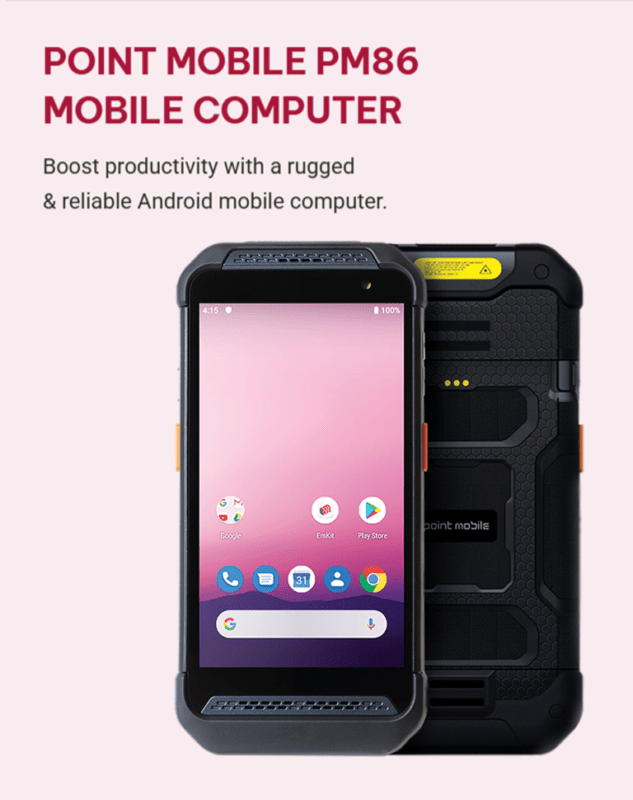
- Modern systems typically support barcode scanners, label printers, and automation.
- Business size, SKU (Stock Keeping Unit) count, and operational complexity should guide your choice.
- All ID Asia provides end-to-end solutions integrating software with barcode and RFID hardware.
Introduction
For many Small and Medium Enterprises (SMEs) in Singapore, managing inventory is becoming more complex as businesses expand across both e-commerce platforms and physical stores. This multi-channel setup, combined with fast-paced operations, high costs, and limited storage space, leaves little room for error.
Accurate inventory tracking is essential in such an environment. Without clear visibility of stock levels, businesses may face overselling, stockouts, and last-minute purchasing—issues that disrupt operations and negatively impact customer satisfaction. Despite these challenges, many businesses still rely on spreadsheets or manual tracking methods, which often result in errors and inefficiencies.
Inventory software for SMEs offers a more reliable, real-time solution by centralising stock data and improving inventory control. Effective inventory management helps business owners avoid costly mistakes like overstocking or stockouts, enhancing decision-making and operational efficiency.
What Is Inventory Management Software?
Inventory management software is a system that tracks stock quantities, locations, movements, and value in real time. Unlike spreadsheets, it connects key workflows such as purchase orders, goods receiving, stock transfers, sales, and stock adjustments.
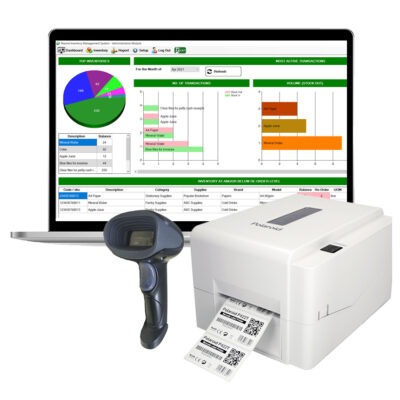
Modern systems typically integrate with barcode scanners, mobile devices, and label printers, allowing businesses to automate data capture and reduce manual entry errors. Some systems operate independently, while others form part of larger ERP (Enterprise Resource Planning) platforms, depending on the specific business needs. This could also be integrated with accounting software to ensure seamless financial reporting and accurate inventory data.
Cloud-based inventory software Singapore apps provide flexibility by allowing access from different locations, requiring only an internet connection. This supports businesses with multiple warehouses or sales channels to manage inventory effectively.
Why Businesses in Singapore Need Inventory Management Software
Manual inventory processes often lead to common challenges:
| Challenge | Impact |
| Manual tracking | 20–30% discrepancies |
| Multiple Excel files | Conflicting data |
| Untracked stock movement | Lost items |
| No stock visibility | Poor decisions |
During peak periods such as major sales events and festive seasons, customer demand can increase significantly, making manual systems difficult to manage. Inventory software helps businesses maintain accurate stock levels, reduce errors, and improve fulfilment speed.
It is also critical for industries requiring compliance and traceability, such as healthcare and food services, where barcode tracking and batch control are essential. Effective inventory management software in Singapore supports demand forecasting to meet customer demand and avoid inadequate stock.
Many small and medium sized businesses in Singapore benefit from inventory software for SMEs that integrates order management and real-time data to optimise stock control across multiple channels and locations.
Moreover, businesses in sectors such as retail, logistics, manufacturing, healthcare, and government agencies increasingly require durable Automatic Identification and Data Collection (AIDC) solutions, including barcode scanning and Radio Frequency Identification (RFID) technology. These technologies enhance inventory accuracy and operational efficiency, making integration with warehouse inventory software a vital consideration. Choosing software that supports these technologies can significantly reduce manual errors and streamline warehouse operations.
Key Features to Look For in Inventory Management Software
Real Time Inventory Tracking Capabilities
- Real-time inventory levels with accurate data
- SKU-based tracking for all the items
- Inventory valuation (FIFO or moving average)
Barcode and QR Code Integration
- Scan during receiving, picking, and stocktaking
- Print barcode labels
- Support for 1D, 2D, and QR codes
Transaction Workflows
- Purchase orders and receiving
- Delivery orders and sales
- Stock transfers and adjustments
Reporting/analytics and Dashboards
- Inventory valuation reports
- Stock ageing analysis
- Fast and slow-moving items
- Detailed reports to support informed decisions
Low-Stock Alerts and Reordering
Automated alerts help maintain optimal inventory levels and avoid stockouts.
Multi-Location and Bin Tracking
Track inventory across multiple warehouses, retail outlets, and physical storage locations (bins/shelves/rows)
Integration Options
Connect with accounting software, POS platforms, and multiple sales channels including e-commerce marketplaces.
Hardware Compatibility
Ensure compatibility with barcode scanners, RFID systems, and label printers to work seamlessly with your existing systems.
Cloud-Based Access and Security
Cloud inventory software Singapore systems provide secure access from different locations with encryption and data backup, ensuring business continuity and data protection. This is also important for future scalability.
Automated Compliance and Reporting
For Singapore businesses, compliance with local tax regulations such as GST is essential. Advanced inventory management system Singapore can automate compliance reporting and integrates seamlessly with accounting software to simplify tax filing and auditing processes.
Who Should Use Inventory Management Software in Singapore?
Inventory systems are suitable for a wide range of businesses:
SMEs in Retail and E-commerce
Manage stock across online and offline sales channels.
Distributors and Wholesalers
Track inventory across multiple warehouses and delivery pipelines.
Warehouses and 3PL Operators
Improve storage and dispatch accuracy using barcode scanning and reduce time-consuming manual processes with warehouse inventory software.
Small Scale Manufacturing and Assembly Plants
Manage raw materials and finished goods efficiently.
Service Businesses with Consumables
Track supplies, tools, and materials.
Any business with growing SKU counts, operating from multiple locations, or encounters frequent operational bottlenecks can benefit from adopting stock inventory system software.
How to Choose the Right Inventory System for Your Business
Assess Business Size and Complexity
The following table can serve as a general guideline; but remember, your ideal system will also depend on factors such as your business model, number of sales channels and operational complexity.
| SKU Count | Staff | Recommended Approach |
| Under 500 | 1–3 | Lightweight system |
| 500–5,000 | 3–10 | Cloud-based system |
| 5,000+ | 10+ | ERP solution |
Evaluate Warehouse and Layout Needs
Consider whether your setup requires simple storage tracking or advanced bin and multi-location management.
Check Barcode and Label Requirements
Review barcode types, label formats, and printing needs.
Review Reporting and Analytics
Determine whether basic reporting or advanced analytics is required to support your supply chain decisions.
Consider Ease of Use and Training
Choose a system that is intuitive and easy for staff to adopt, saving time and reducing errors.
Plan for Scalability
Ensure the system can support your business as it grows in SKUs, locations, and integrates with other apps.
Consider Integration and Pricing Plans
Evaluate software that supports integration with existing accounting and order management systems. Review pricing plans to ensure they fit your budget and business scale.
When Should SMEs Consider a Practical Inventory Management System like Pesona IMS Basic?
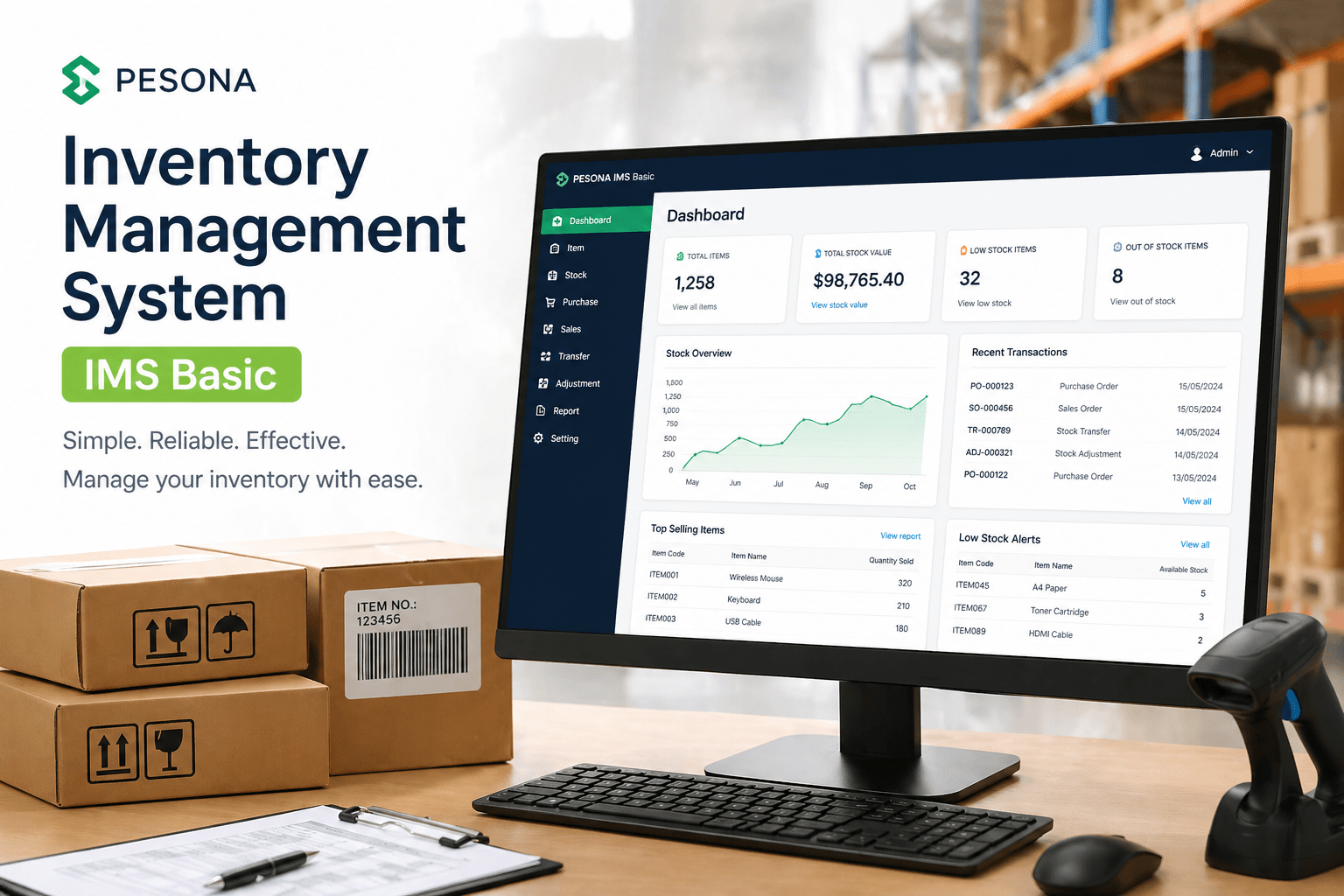
Practical Inventory Management Systems like Pesona IMS Basic helps SMEs,
- Manage a few hundred to a few thousand SKUs daily
- Operate from one or several locations or multiple warehouses
- Move beyond spreadsheets
They support:
- Centralised receiving
- Stock transfers
- Barcode-based stock taking
- Simple stock issuance
Compared to full ERP systems, practical inventory management systems offer faster implementation, lower complexity, and practical features for daily inventory operations in Singapore’s business environment.
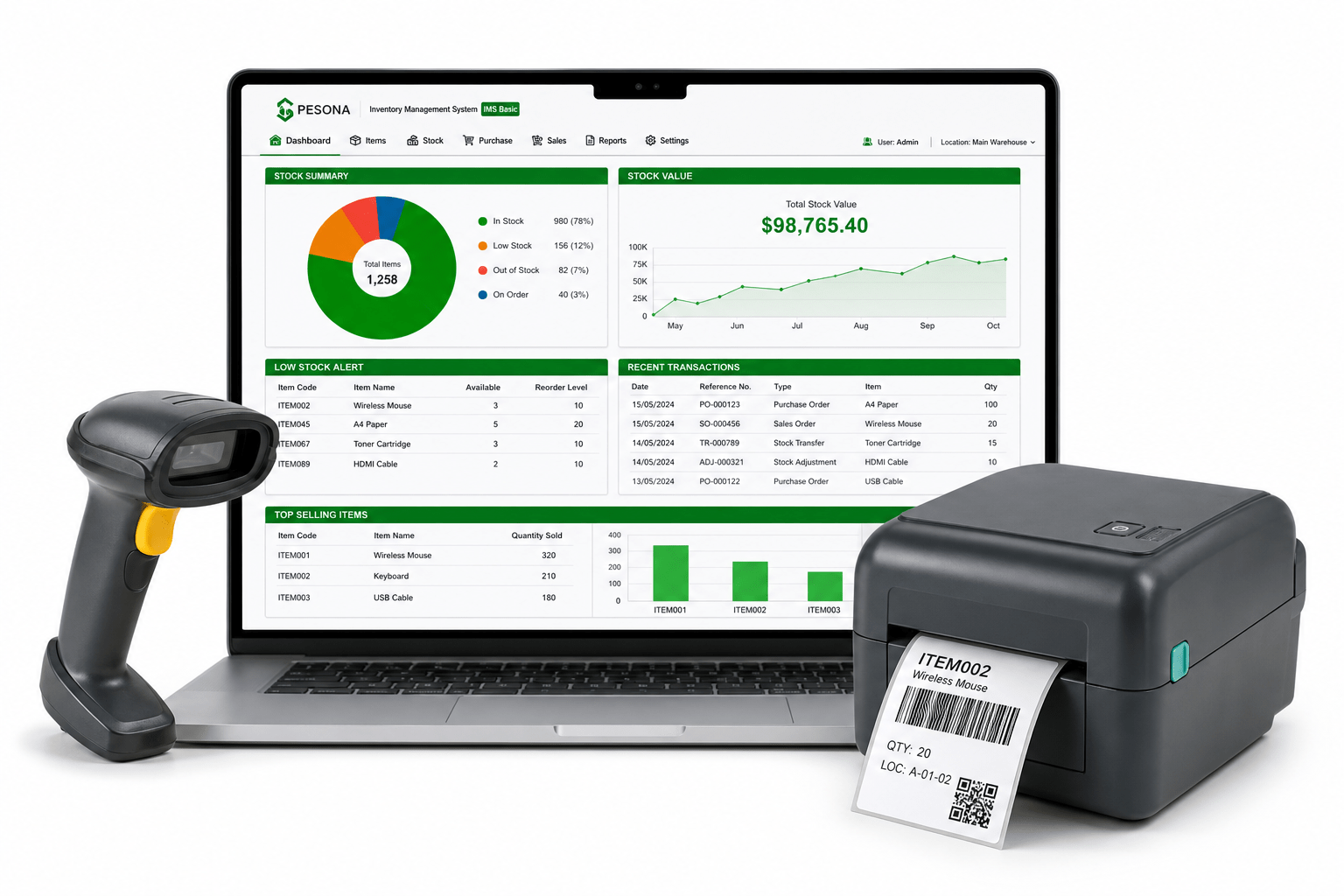
Additionally, these are designed with user-friendliness in mind, requiring minimal training for staff to get started quickly. Their compatibility with barcode scanners and label printers ensures seamless integration with existing hardware, enhancing accuracy and efficiency.
Pesona IMS Basic is an ideal choice for growing businesses seeking a reliable, cost-effective inventory software Singapore solution without the overhead of complex ERP platforms. This system provides essential reporting tools that help businesses monitor stock levels, identify slow-moving inventory, and make informed purchasing decisions. . Get in touch with All ID Asia to learn more about Pesona IMS.
Common Mistakes to Avoid When Selecting Inventory Software
Choosing Purely on Price
Low-cost systems may lack essential features and security.
Ignoring Workflow Fit
Software should align with your unique business processes to avoid inefficiencies.
Skipping Barcode Integration
Manual entry increases error rates and is time consuming.
Inadequate Implementation Planning
Lack of preparation can lead to poor adoption and inaccurate data.
No Clear System Owner
Without ownership, data accuracy declines over time and accountability is lost.
Unverified Local Support
Ensure your vendor provides reliable support and understands local business sector needs.
FAQs
Is inventory management software suitable for small SMEs in Singapore?
Yes. Even businesses with 100–300 SKUs benefit from improved accuracy and efficiency.
What is the difference between inventory software and a full ERP system?
Inventory software focuses on inventory control, while ERP systems include finance, accounting software, and other modules.
Can inventory management software support barcode scanners and label printing?
Yes. Most modern systems can be efficiently integrated with scanners and label printers.
Do I need cloud-based inventory software, or is on-premise still relevant?
Cloud systems are widely used due to lower costs and easier access, though on-premise solutions remain relevant for specific industries requiring higher security.
How long does it usually take to implement an inventory management system?
While small setups can be completed within 2–4 weeks larger systems may require longer than that. Speak to your service provider to get a more accurate timeline.
Final Thoughts
Inventory management software is essential for businesses in Singapore looking to improve accuracy, efficiency, and scalability. With real-time visibility and automation, businesses can reduce errors, optimise inventory levels to meet customer demand, and make informed decisions that support a successful business.
Choosing the right inventory software that fits your operational needs and integrates seamlessly with existing systems will save time and enhance your overall operational efficiency as your business grows.
Take the Next Step
Ready to optimize your inventory control and meet customer demand more effectively? Discover how Pesona IMS Basic can provide real-time visibility, streamline your workflows, and support your business growth. Visit Barcode.com.sg to learn more about inventory management systems or contact our experts today for a personalised consultation tailored to your specific requirements.
Empower your business with the right inventory management system in Singapore and stay ahead of your competitors.
